Classic American T-Bone Steak with Smoky Grill Marks
My husband asked for steak on his birthday every single year, and the first time I got the grill marks right, he stopped talking mid-bite.
This is a straightforward cook with no shortcuts hidden in the instructions. The crust, the smell of fat hitting the grate, the exact moment to flip, all of it is in the steps.
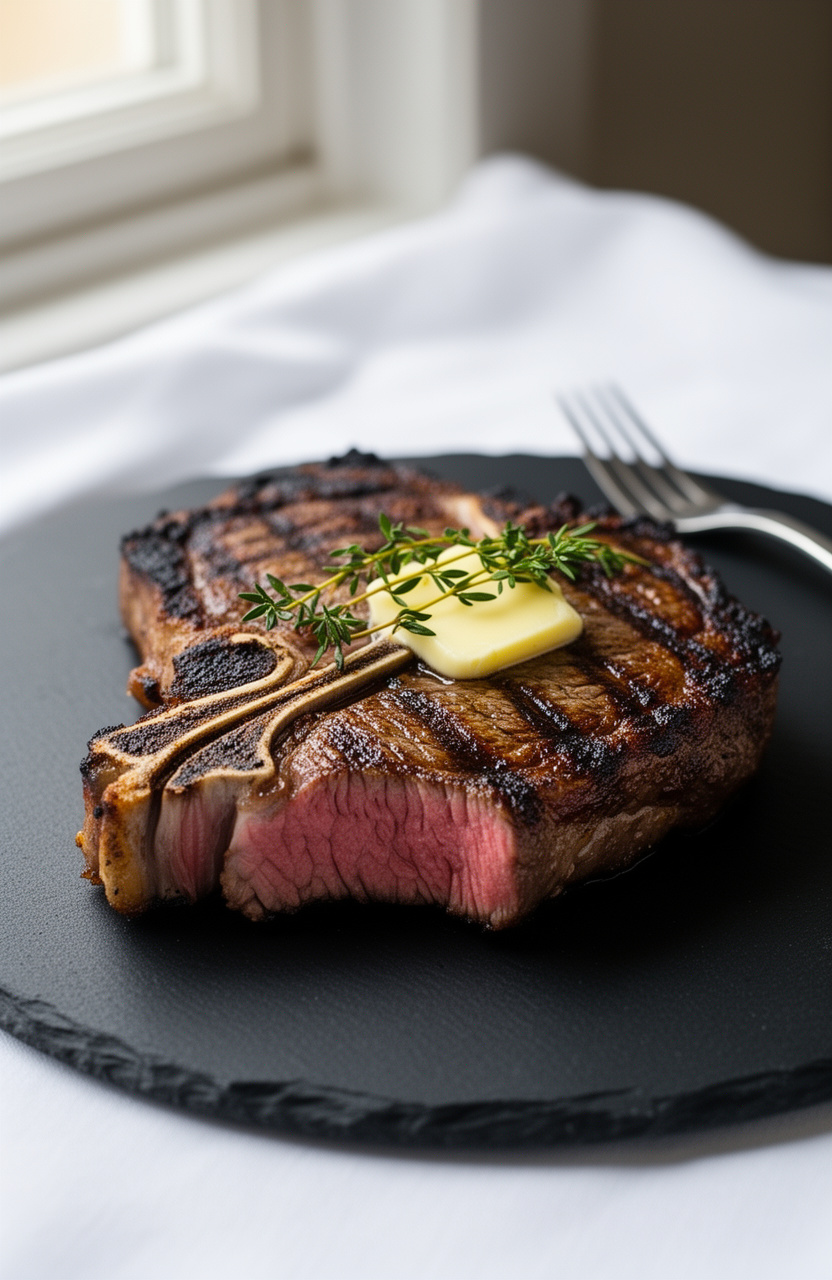
Classic American T-Bone Steak with Smoky Grill Marks
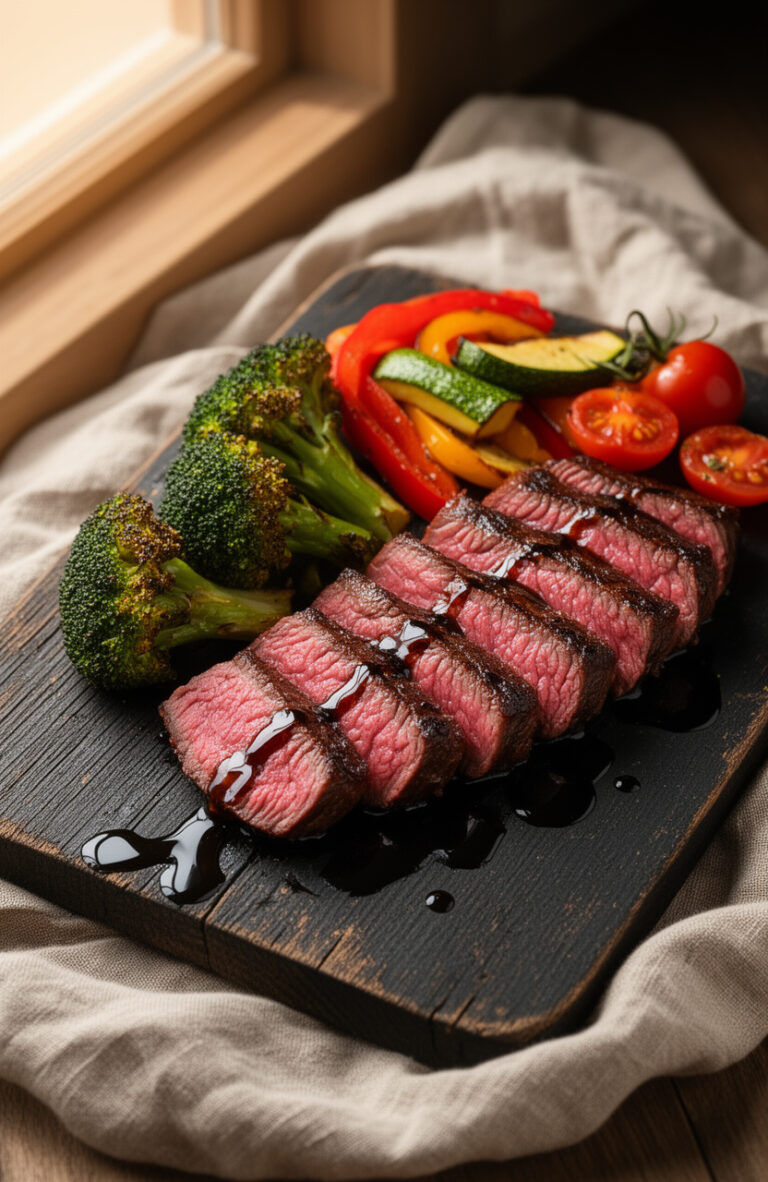
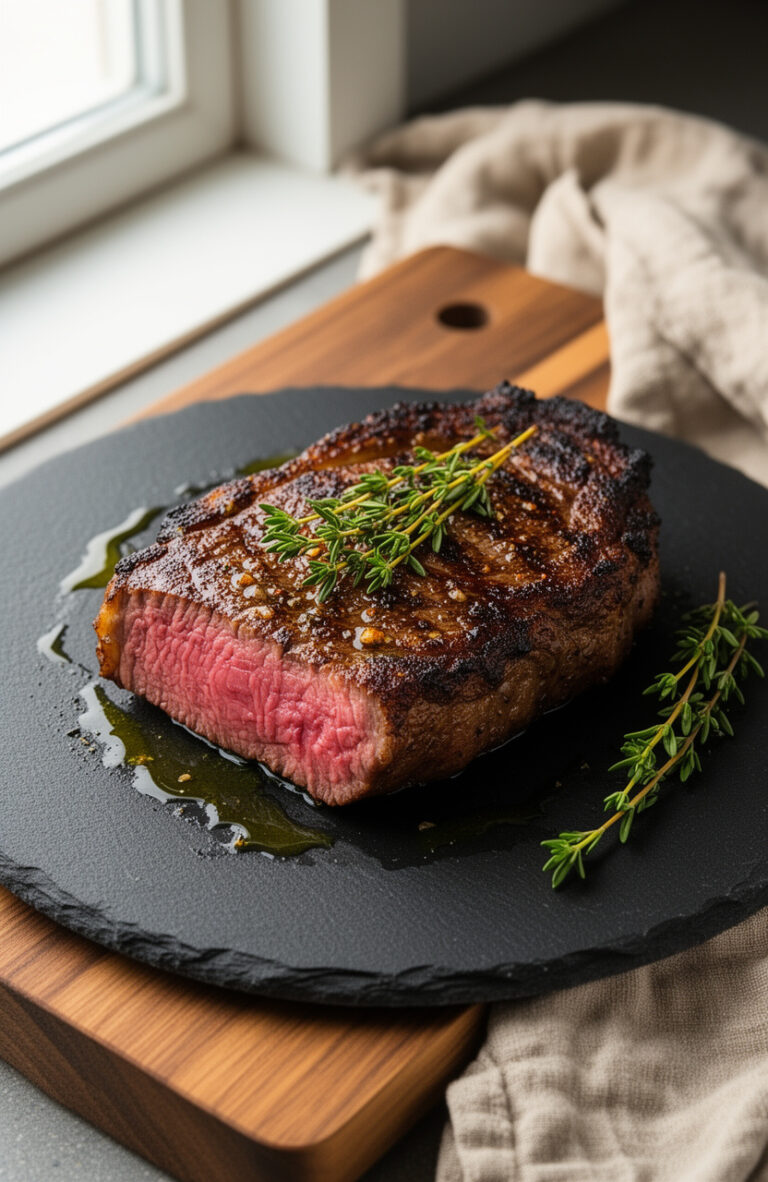
A thick, well-seasoned T-bone seared over high heat until the crust crackles and the inside stays pink and juicy.
Ingredients
- 2 T-bone steaks, 1 to 1.25 inches thick , about 1 lb each
- 2 tsp kosher salt
- 1 tsp coarse black pepper , freshly ground
- 1 tsp garlic powder
- 1 tsp smoked paprika
- 1 tbsp neutral oil , such as canola or avocado oil
- 2 tbsp unsalted butter , for finishing
- 2 fresh thyme sprigs , optional
Instructions
Tips & Notes
- Dry-brine the steaks uncovered in the refrigerator the night before by salting them and leaving them on a rack. The surface dries out overnight and the crust becomes noticeably better.
- Never press down on a steak with a spatula. You squeeze out the juice and flatten the texture.
- The bone side cooks slower than the strip side. If your steak is very thick, stand it on the bone edge for 60 seconds before resting to help it catch up.
- If using charcoal, position the steaks directly over the hottest coals and keep the lid open during the sear so you get grill flavor without steaming.
- A T-bone has both the strip and the tenderloin separated by the bone. The tenderloin side is smaller and cooks faster. Angle that side slightly away from the hottest part of the grill if needed.
Nutrition per serving · estimated


Why the Preheat Time Actually Matters Here
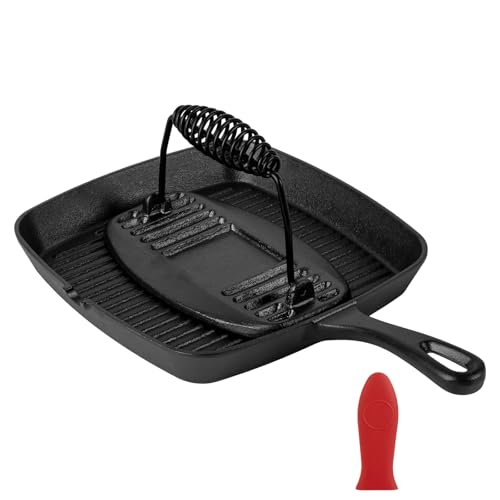
A lot of recipes say heat your grill and move on. With a T-bone this thick, the grate temperature determines whether you get a crust or a gray band around the outside.
Twenty minutes on high before you cook is not excessive. It is what gets the metal hot enough to transfer real sear heat in the first 60 seconds of contact. Rushing that step means your steak cooks through from residual heat before the outside gets any color.
Choosing the Right T-Bone at the Store
Look for steaks with a large tenderloin section on one side of the bone. A very thin sliver of tenderloin means you are looking at a porterhouse cut from the front of the short loin, which gives you less of that buttery texture.
Thickness matters more than weight. A 1.25-inch steak gives you room to build a real crust without overcooking the center. Anything thinner than 0.75 inches will be well-done before the grill marks even set.