Balsamic Glazed Steak with Roasted Vegetables
My husband used to think a good steak required a restaurant, and I made it my quiet mission to prove him wrong in our own kitchen.
This one comes together in about 45 minutes total, with only 15 minutes of active work before the oven takes over.
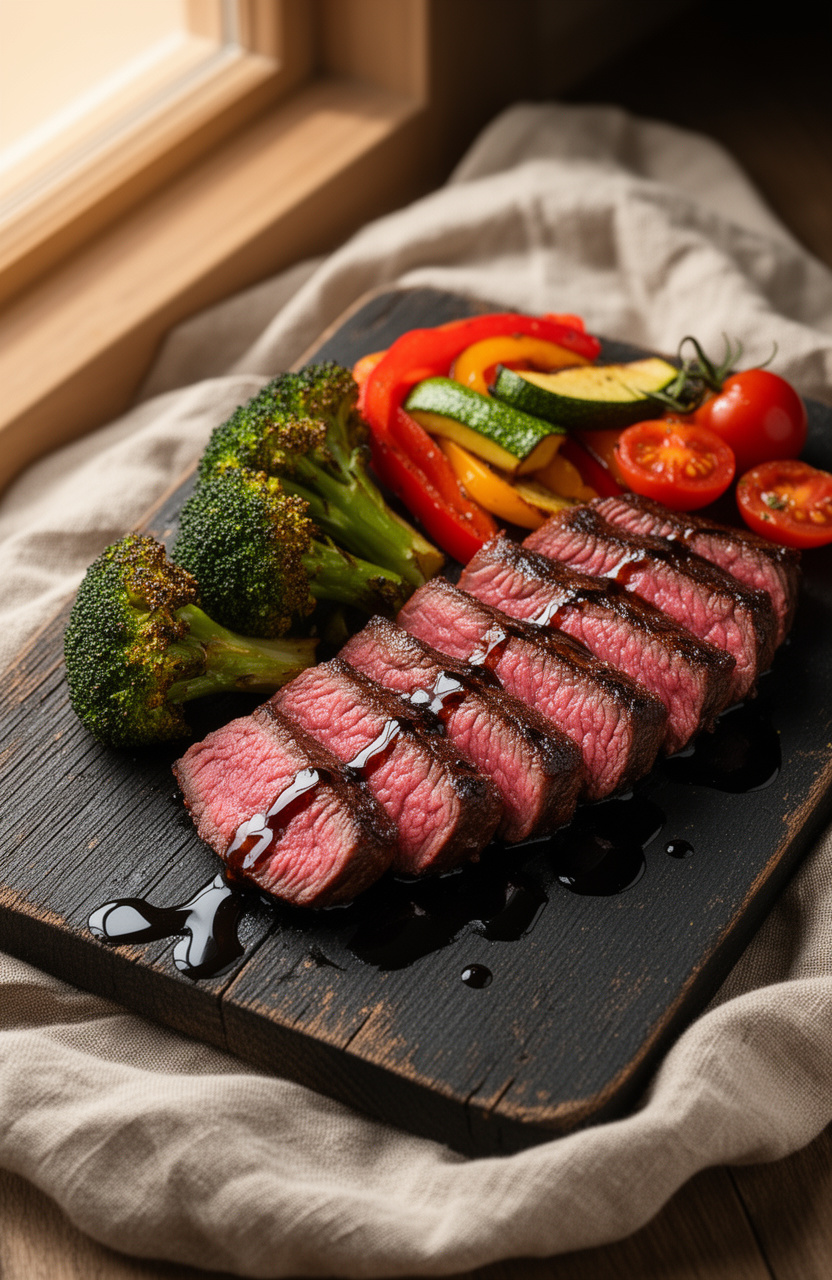
Balsamic Glazed Steak with Roasted Vegetables
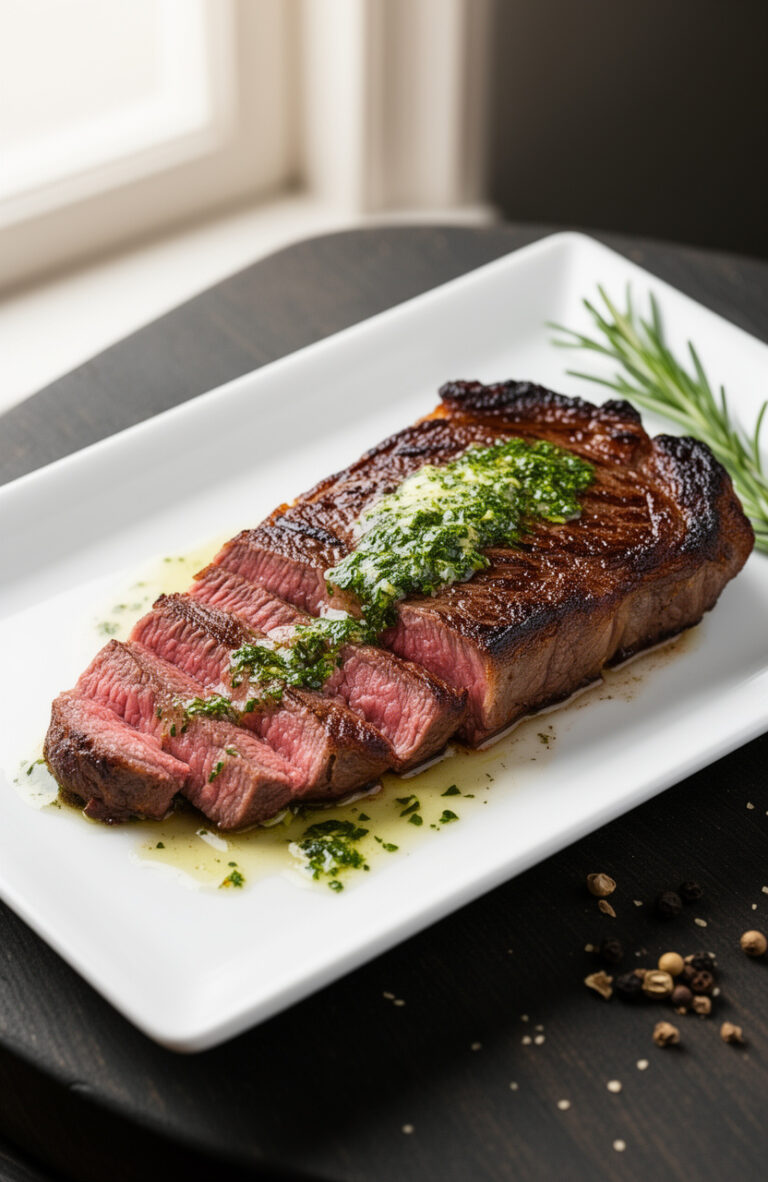
Tender seared steak finished with a sticky balsamic glaze, served alongside caramelized roasted vegetables.
Ingredients
Steak and Glaze
- 2 lbs flank steak or sirloin , about 1 inch thick
- 1/3 cup balsamic vinegar
- 2 tbsp soy sauce , use tamari for gluten-free
- 1 tbsp honey
- 2 cloves garlic , minced
- 1 tbsp olive oil
- 1 tsp kosher salt
- 1/2 tsp black pepper
Roasted Vegetables
- 2 cups broccoli florets
- 1 large red bell pepper , sliced into strips
- 1 medium zucchini , sliced into half-moons
- 1 cup cherry tomatoes
- 2 tbsp olive oil
- 1/2 tsp kosher salt
- 1/4 tsp black pepper
- 1/2 tsp garlic powder
Instructions
Roast the Vegetables
Make the Balsamic Glaze
Sear and Finish the Steak
Serve
Tips & Notes
- Letting the steak sit at room temperature for 15 minutes before cooking helps it sear evenly. Cold steak straight from the fridge takes longer and the outside overcooks before the inside catches up.
- If your glaze reduces too far and turns into candy on the bottom of the pan, add 1 tablespoon of water and stir over low heat. It will loosen.
- Flank steak must be sliced against the grain or it will be chewy. Look for the lines of muscle fiber running lengthwise and cut perpendicular to them.
- Leftovers reheat best in a skillet over medium-low heat with a splash of water rather than the microwave, which toughens the steak.
Nutrition per serving · estimated


Why the Glaze Goes On in Two Stages
Adding raw glaze at the end of searing rather than marinating the steak in it first keeps the honey from burning black on the pan before the meat is cooked through. The heat in those last 60 seconds is enough to caramelize it without scorching.
The reduced version you drizzle at the end is quieter and more concentrated. Together they give you two layers of balsamic flavor without either one being overwhelming.
Choosing the Right Cut for This Recipe
Flank steak is my first choice here because it is thin enough to cook quickly and has enough surface area to get a real sear. Sirloin works too and is a bit more forgiving if you are newer to cooking steak.
Avoid anything much thicker than 1 inch for this method. A thicker cut would need to finish in the oven, which changes the timing and the texture of the glaze entirely.