Watermelon Strawberry Sorbet Without An Ice Cream Maker
My kids started asking for this every summer after the first time I made it on a Tuesday afternoon when the watermelon on the counter was getting too soft to slice.
You freeze the fruit first, then blend it. That order matters, and once you know it, this becomes one of those recipes you stop measuring.
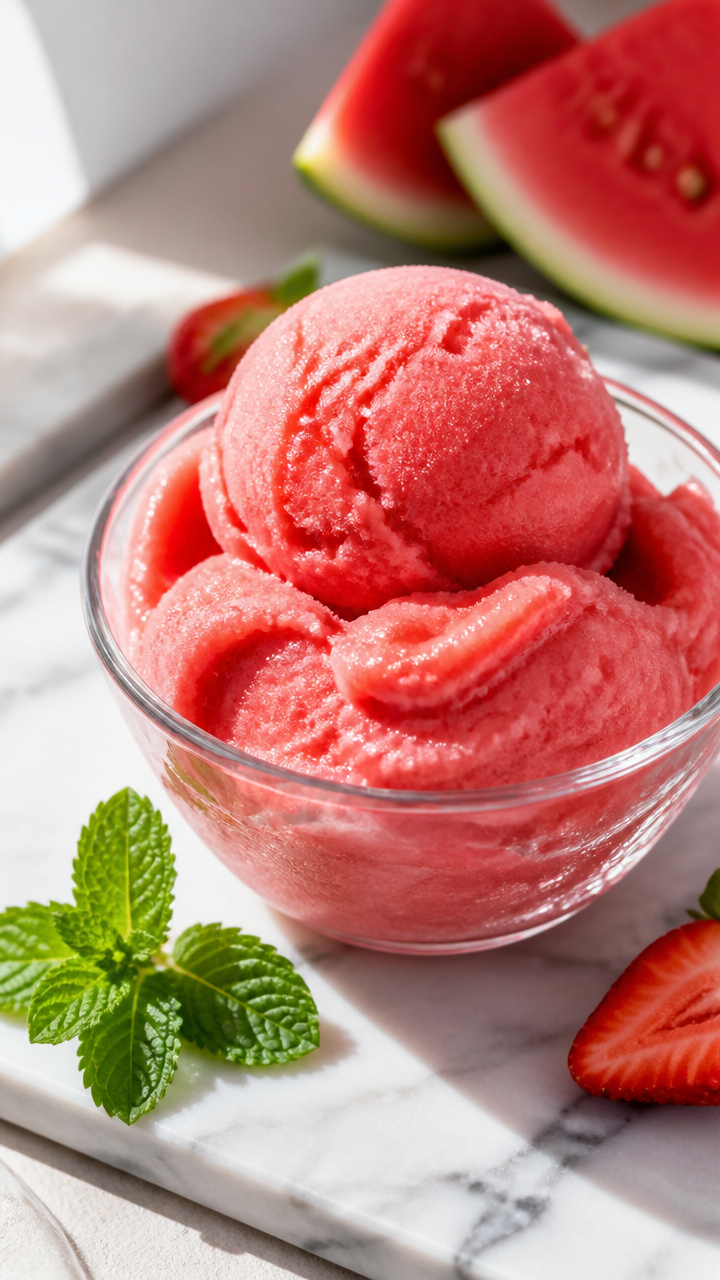
Watermelon Strawberry Sorbet Without An Ice Cream Maker
A bright, icy dessert made with two ingredients and a freezer, no special equipment needed.
Ingredients
- 4 cups watermelon , seedless, cut into 1-inch cubes
- 1 cup fresh strawberries , hulled and halved
- 2 tablespoons fresh lime juice , about 1 lime
- 1 tablespoon honey or agave , optional, adjust to taste
Instructions
Tips & Notes
- Use the ripest watermelon you can find. Pale or underripe watermelon makes a bland sorbet that no amount of lime will fix.
- If your blender struggles, add 1 to 2 tablespoons of cold water, not warm, to get things moving without melting the fruit.
- For a smoother finish, strain the blended sorbet through a fine mesh sieve before the second freeze. It takes 3 extra minutes and removes any fibrous bits from the strawberry seeds.
- Agave keeps this fully vegan. Honey works just as well but adds a faint floral note that some people love and others notice.
Nutrition per serving · estimated


Why Freezing the Fruit First Changes Everything
Most no-churn sorbet recipes tell you to blend fresh fruit with sugar and freeze the whole thing, then stir it every 30 minutes for 3 hours. That method works, but it also means you are tethered to your freezer on a hot afternoon.
Freezing the fruit in pieces first means you skip all of that. The blender does the churning work in under 2 minutes, breaking the frozen fruit into tiny ice crystals that give you the smooth, scoopable texture an ice cream maker would produce.
The result is not icy or grainy the way homemade sorbets often are. It is dense and cold and genuinely smooth, and it tastes like the fruit itself rather than a frozen approximation of it.
How to Know Your Sorbet Is Done Blending
The sound is the most reliable cue. When the blender first hits frozen fruit it makes a harsh, clattering noise. As the fruit breaks down the sound gets lower and more consistent, almost like a motor running evenly. That shift tells you the texture is changing.
The color shift matters too. The mixture starts out bright red and chunky, then fades to a uniform soft pink as everything becomes the same fine texture. If you still see dark red streaks, keep blending for another 15 to 20 seconds.
Taste it before you scoop or re-freeze. Cold dulls sweetness, so if it tastes slightly flat straight from the blender it will taste even flatter frozen. A few more drops of lime juice usually fixes it faster than more sugar.