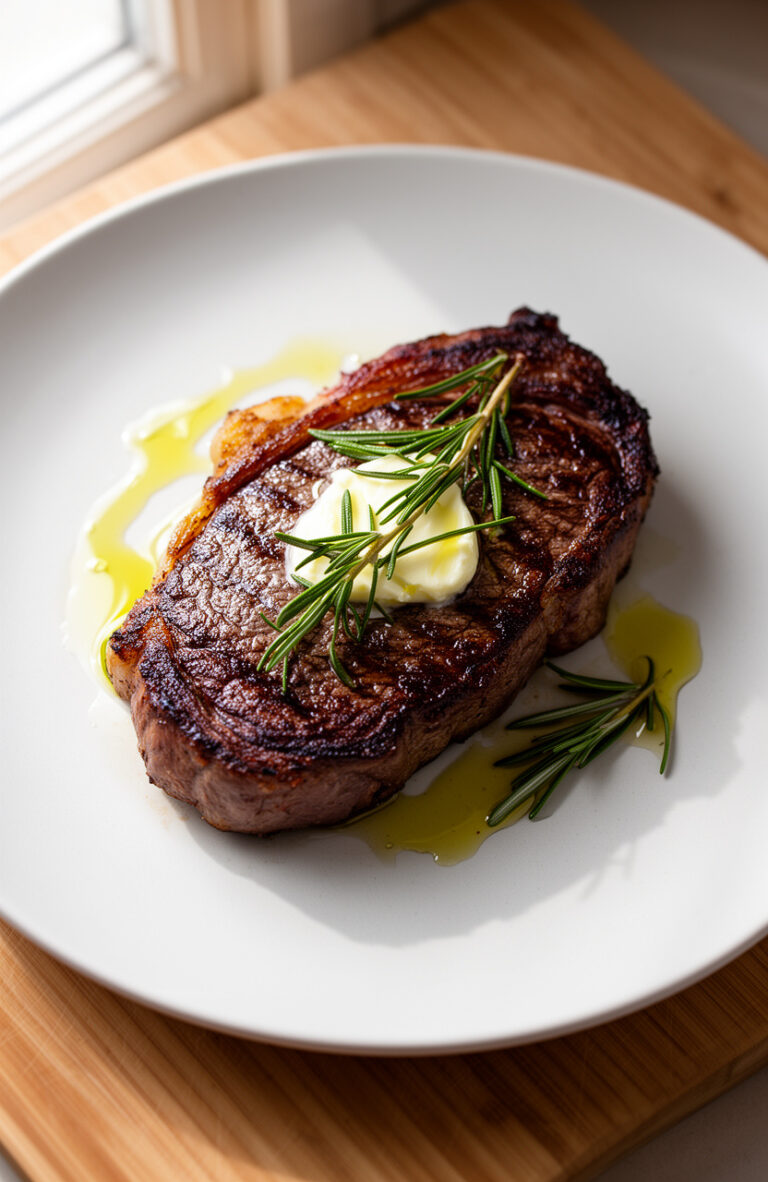
Peppercorn Crusted Steak with Creamy Sauce
My husband requested this for his birthday two years running, which is the only endorsement I need.
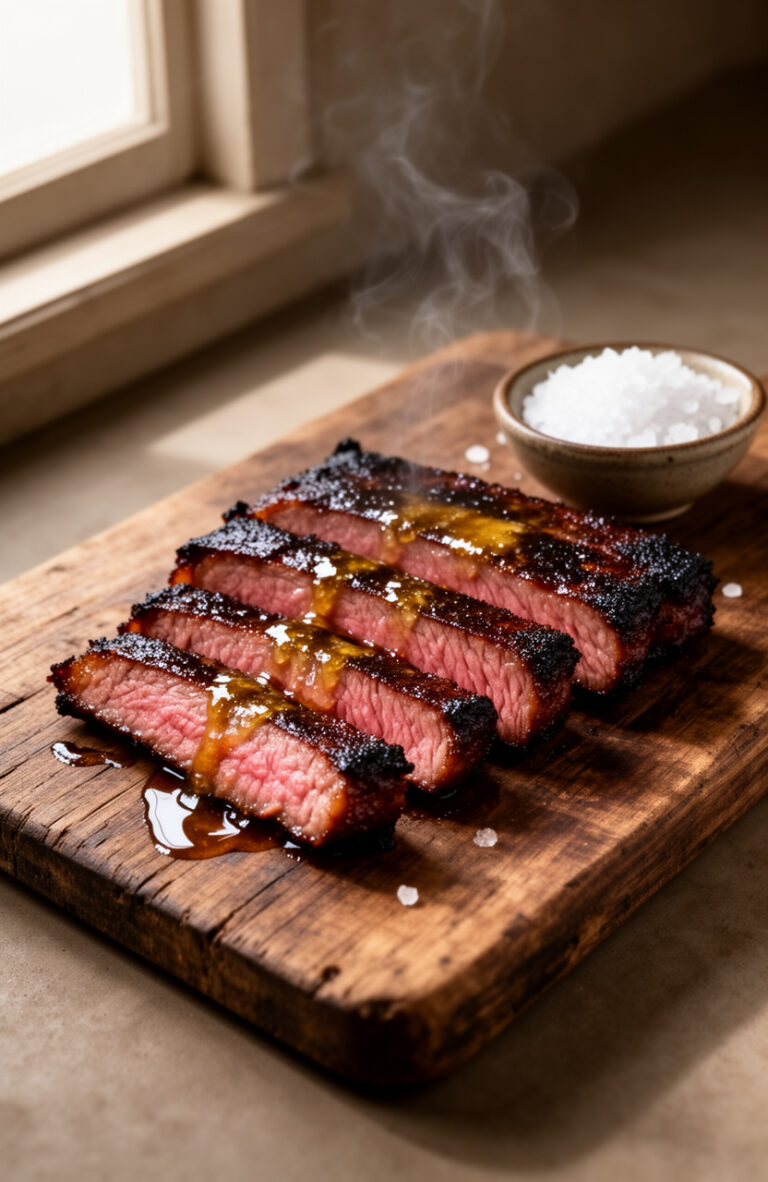
The peppercorn crust does real work here. It gives you texture, heat, and something for the sauce to cling to.
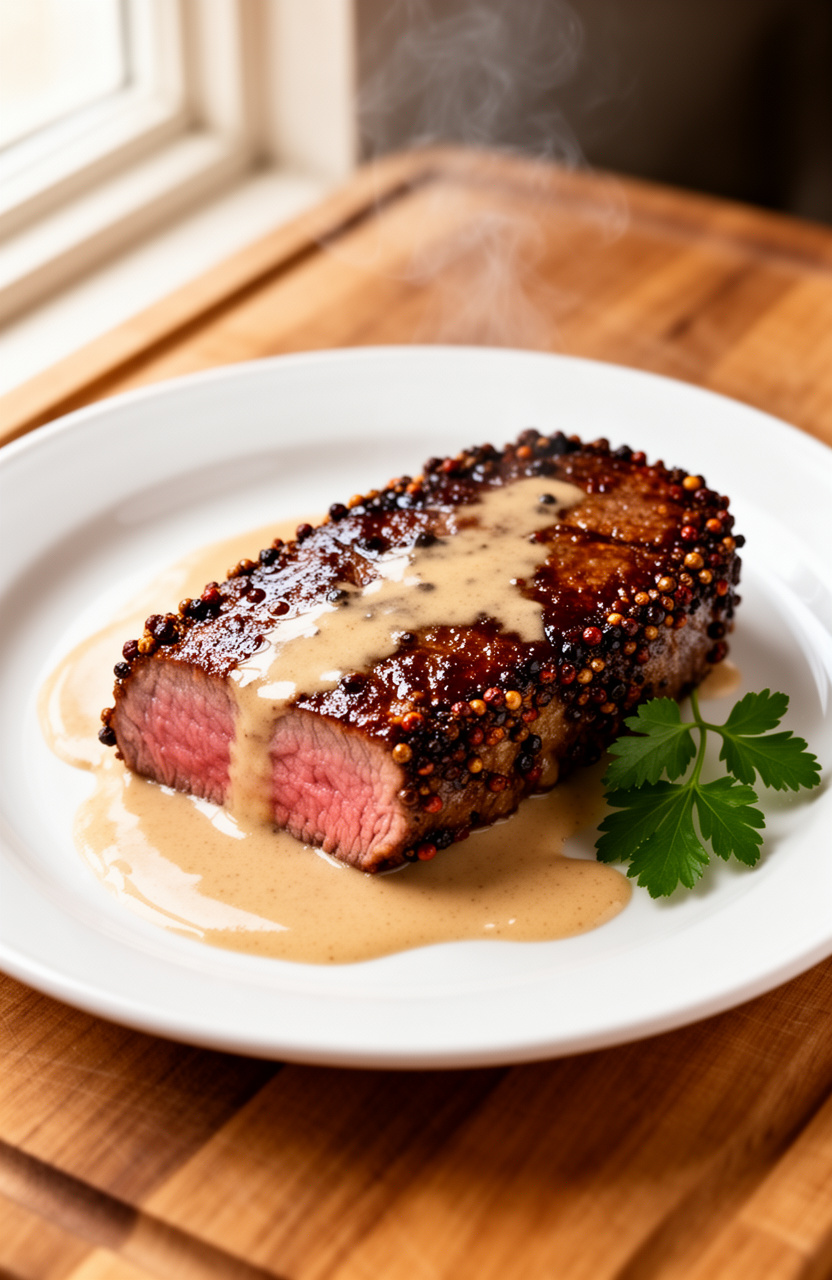
Peppercorn Crusted Steak with Creamy Sauce
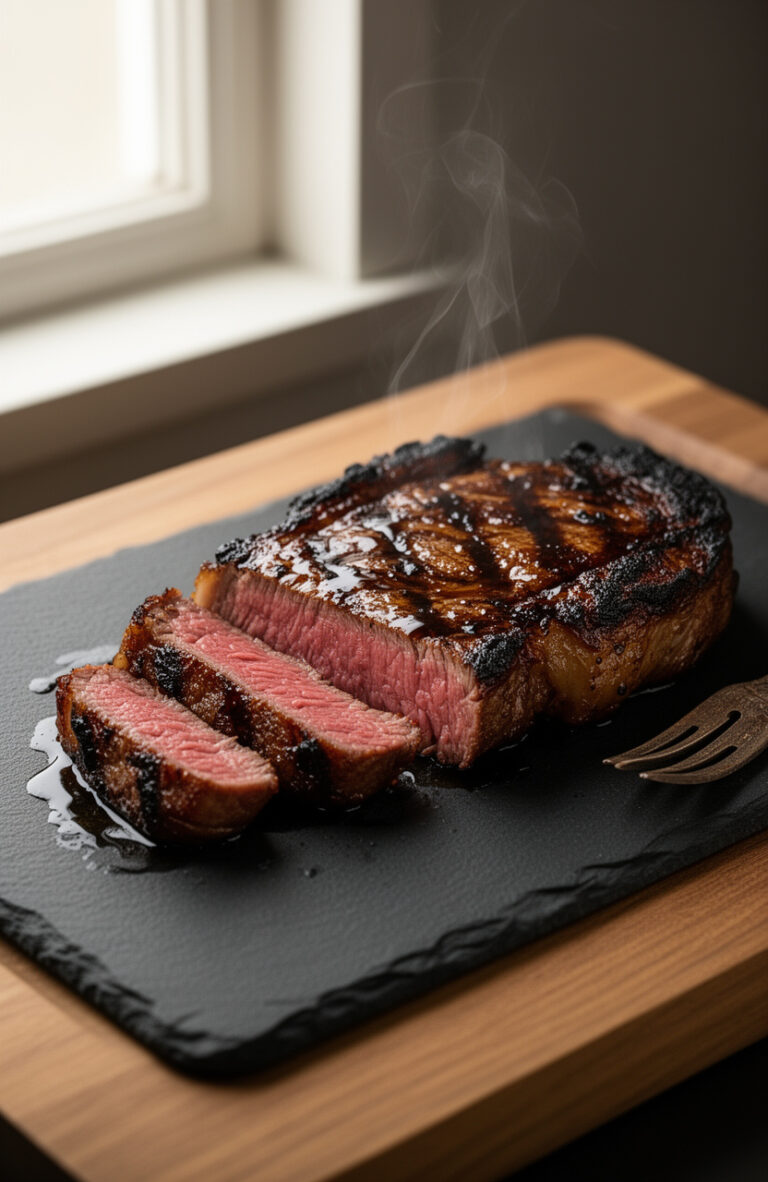
A boldly crusted steak with a pan sauce that comes together while the meat rests.
Ingredients
Steak and Crust
- 4 ribeye or strip steaks, about 1 inch thick
- 3 tablespoons whole black peppercorns , coarsely crushed
- 1 tablespoon kosher salt
- 1 tablespoon neutral oil , such as avocado or canola
Creamy Pan Sauce
- 2 tablespoons unsalted butter
- 3 cloves garlic , minced
- 1 teaspoon Dijon mustard
- 1 cup heavy cream
- 1 tablespoon Worcestershire sauce
- salt and pepper , to taste
- 1 tablespoon fresh parsley , chopped, for finishing
Instructions
Tips & Notes
- Room temperature steaks cook more evenly. Pull them from the fridge 20 to 30 minutes before cooking.
- If your pan starts smoking heavily before the oil goes in, that is normal for cast iron on high heat. Smoke means it is ready.
- Do not skip pressing the peppercorns into the meat by hand. A loose crust will fall off in the pan.
- The sauce will tighten as it cools. If it gets too thick, add a splash of cream and stir over low heat.
Nutrition per serving · estimated


Why the Crust Matters More Than the Cut
A peppercorn crust is not decoration. It creates a barrier that keeps moisture inside while building a layer of texture and heat on the outside. When you press the pepper in by hand, you are locking it to the surface so it survives the high heat without burning.
Coarse and uneven is what you want. A fine grind turns bitter in a screaming hot pan. Irregular chunks toast at different rates and give you complexity in every bite.
Getting the Sauce Right in 4 Minutes
The sauce builds on the fond left behind after searing. Those dark, stuck bits dissolve into the cream and carry the flavor of the whole crust with them. Skipping the deglazing step means leaving the best part of the dish on the pan.
Watch the color as it simmers. It will shift from white to a warm tan as the cream reduces and picks up the drippings. That color change is your cue that it is ready, more reliably than any timer.